
Topic: Outdoor leadership, teamwork, intergenerational collaboration
Duration: 3 hours
Location: Forest trails, national parks, or accessible hiking routes
Target group: Young professionals (20–35 years old), older adults (50+ years old), community leaders
Group size: 25 participants (12 young professionals, 13 older adults)
Human resources: Facilitator (1), hiking guide (1), team-building coach (1), volunteers (3)
Spatial requirements: Outdoor space with a defined trail, open areas for group activities, and shaded rest points
Required material:
- Printed trail maps
- Notebooks and pens for reflections
- Reusable water bottles
- Name tags
- Portable whiteboard and markers
- First aid kit
Objectives:
- Strengthen intergenerational teamwork through nature-based challenges
- Foster leadership skills by engaging participants in outdoor problem-solving tasks
- Enhance environmental awareness while promoting sustainable outdoor activities
- Encourage open dialogue and knowledge exchange between generations
Description:
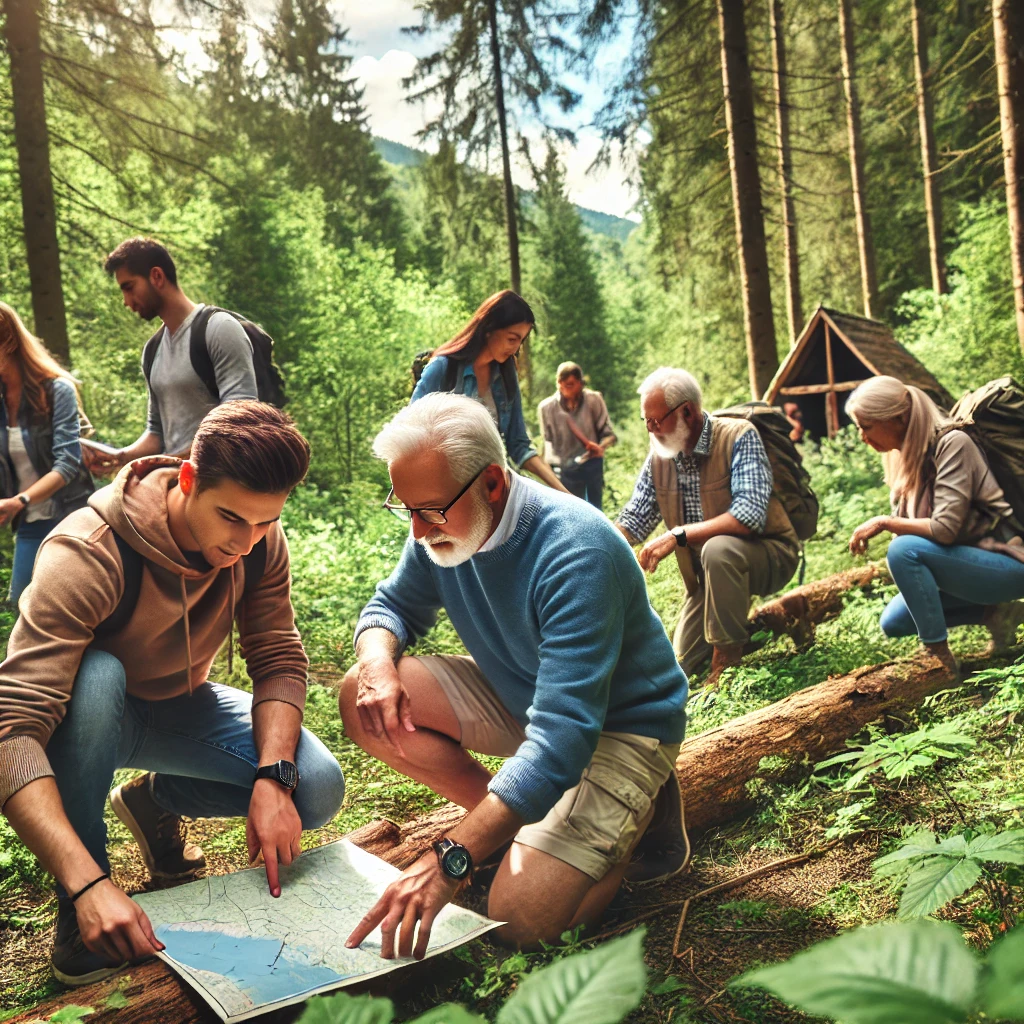
This methodology centers around structured, team-based outdoor activities aimed at fostering teamwork and leadership skills. Participants are placed into intergenerational teams that must collaborate on different challenges at designated stops along a scenic hiking trail. Each activity is designed to enhance problem-solving abilities, leadership roles, and teamwork through experiential learning.
Event preparation and start:
Participants are welcomed by the facilitator and given an overview of the hike’s purpose. Name tags are distributed, and teams are assigned to ensure an even mix of younger and older participants. Each team receives a trail map and a schedule of the activities. The event begins with a short warm-up exercise to introduce participants to one another and encourage interaction.
Stages:
Stage 1: Team Navigation & Strategy
Teams receive a set of clues and must navigate to the first checkpoint using their maps. Along the way, they discuss their personal experiences with leadership and problem-solving, comparing generational perspectives.
Objective: Develop critical thinking and strategic decision-making skills.
Stage 2: Leadership in Action
At the second checkpoint, each team selects a leader who will guide them through a collaborative physical task, such as constructing a temporary shelter or solving an environmental puzzle.
Objective: Test leadership abilities and promote adaptability in teamwork.
Stage 3: Reflection & Shared Wisdom
At the final checkpoint, participants share what they have learned from one another. Younger participants reflect on traditional leadership wisdom, while older participants discuss modern approaches to collaboration and innovation.
Objective: Encourage mutual learning and appreciation for diverse leadership styles.
Questions:
- How did working with a different generation change your approach to teamwork?
- What leadership qualities stood out the most in your team?
- How can outdoor experiences enhance collaboration and communication?
- What lessons from today can you apply to your professional or personal life?
Useful (additional) information:
- Send a post-event email summarizing key takeaways and sharing additional leadership resources.
- Encourage participants to stay connected and apply their learning to future intergenerational initiatives.
Evaluation:
- Conduct a feedback session to assess engagement and learning outcomes.
- Gather participant insights on how nature-based activities influenced their teamwork skills.