
Topic: Sustainability education, intergenerational cooperation, ecological awareness
Duration: 4 hours
Location: Nature reserve, eco-park, or sustainable farming site
Target group: Students (16–25 years old), environmental activists, older citizens (55+ years old)
Group size: 30 participants (15 students, 15 older adults)
Human resources: Sustainability educator (1), facilitator (1), volunteers (4)
Spatial requirements: An outdoor setting with accessible trails, seating areas, and designated activity zones
Required material:
- Reusable notebooks and pens
- Gardening tools for hands-on ecological tasks
- Informational booklets on sustainability
- A digital camera for documentation
- First aid kit
Objectives:
- Inspire intergenerational collaboration in sustainability practices
- Educate participants about conservation efforts through hands-on activities
- Bridge generational knowledge gaps in environmental awareness and action
- Develop a shared commitment to eco-friendly habits
Description:
This methodology is structured around a collaborative eco-challenge where participants engage in both physical and discussion-based tasks related to environmental sustainability. Intergenerational teams work together to complete sustainability missions, from tree planting to upcycling projects, promoting both ecological awareness and cooperation.
Event preparation and start:
The facilitator welcomes participants and introduces the event’s goals. Teams are formed by pairing younger and older participants, ensuring diverse perspectives in each group. A brief introductory session covers the importance of sustainability and outlines the eco-challenges participants will face.
Stages:
Stage 1: Environmental Discovery Walk
Teams embark on a guided nature walk where they observe and document environmental concerns such as pollution, biodiversity loss, and deforestation.
Objective: Increase awareness of local environmental issues and intergenerational knowledge-sharing.
Stage 2: Hands-on Sustainability Action
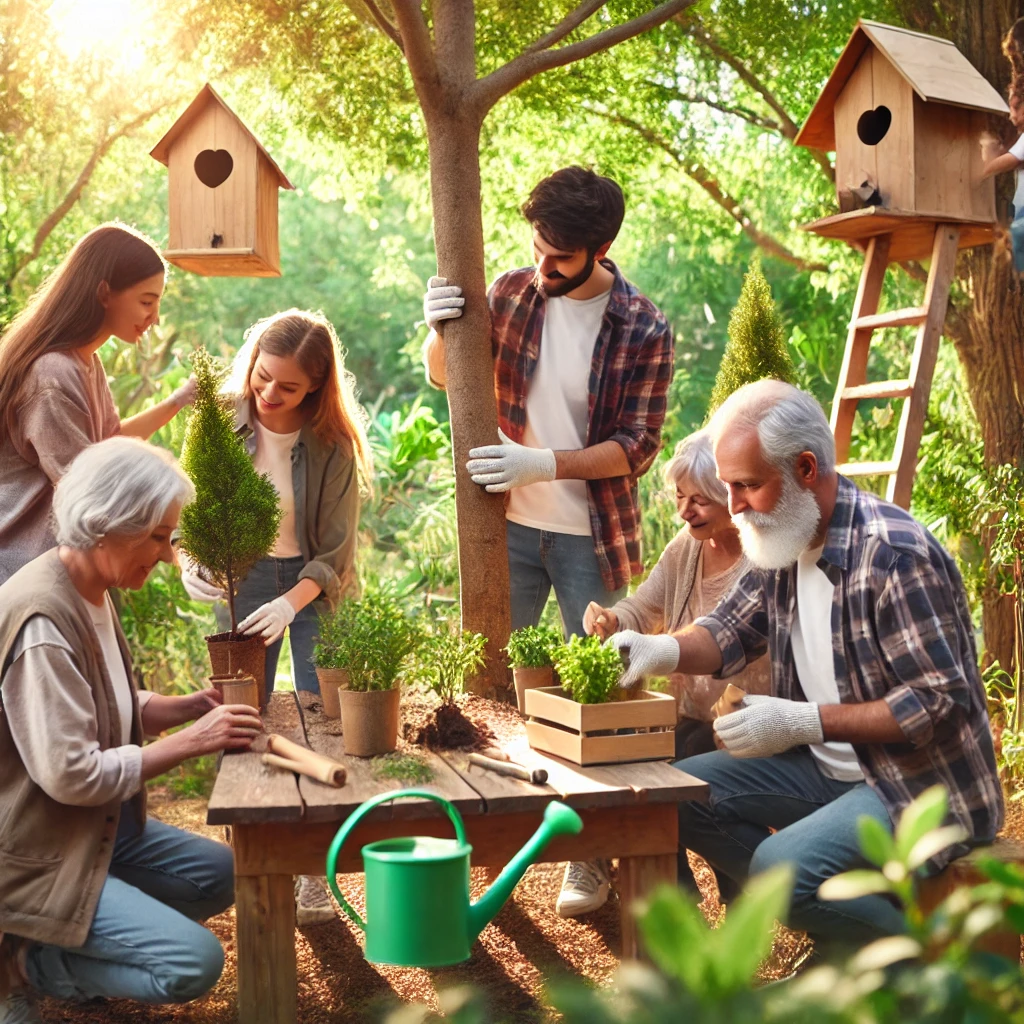
Participants engage in practical conservation activities, such as planting native trees, building birdhouses, or setting up a community composting system.
Objective: Foster a sense of responsibility and encourage active participation in conservation efforts.
Stage 3: Community Dialogue & Pledge
At the final stage, teams discuss ways to apply sustainability lessons in their daily lives and draft a collective pledge to promote environmental protection.
Objective: Strengthen long-term commitment to eco-friendly practices through dialogue and action planning.
Questions:
- What sustainability issues did you find most pressing during the discovery walk?
- How did your team combine traditional and modern approaches to environmental protection?
- What actions can individuals and communities take to support sustainability efforts?
- How can intergenerational dialogue strengthen environmental advocacy?
Useful (additional) information:
- Share a follow-up newsletter featuring photos and participant reflections.
- Provide resources on sustainability practices and local environmental initiatives.
Evaluation:
- Use participant surveys to assess knowledge gained and attitudes towards sustainability.
- Gather feedback on how intergenerational collaboration enhanced learning and engagement.