
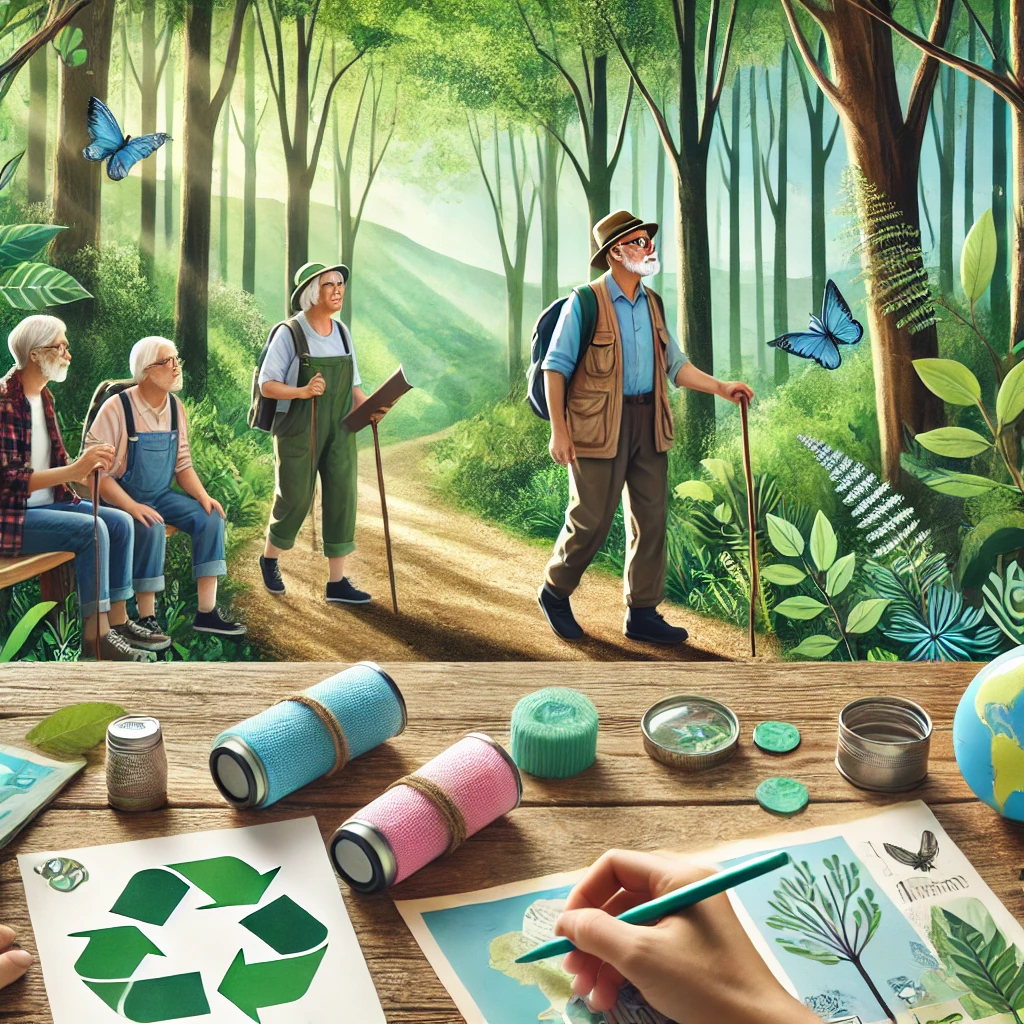
Basic Informations
Age range: 8–16 years (youth), 55–75 years (elderly)
Number of players: 3–5 teams (3–6 members each)
Duration: 1.5–2 hours
Primary focus of the game: A fun and interactive way to learn about ecosystems, sustainability, and environmental protection through an outdoor scavenger hunt.
Materials:
- Scavenger hunt list
- Task cards
- Bags for collecting litter
- Notebooks and pencils
How to Play:
Preparation:
- Each team receives a scavenger hunt list with nature-related items to find.
- The game master explains the scoring system.
Tasks:
Checkpoint 1: Biodiversity Spotting – Identify three different plant or animal species and document their role in the ecosystem. (15 points)
Checkpoint 2: Eco Clean-up – Collect litter along the trail and categorize it as recyclable or non-recyclable. (10 points for every five pieces of litter)
Checkpoint 3: Sustainability Quiz – Teams must answer three sustainability-related questions to proceed. (10 points per correct answer)
Checkpoint 4: Environmental Art – Create a small piece of eco-art using only natural materials found on the trail. (15 points for creativity)
Finish:
- The team with the most points wins.
- Additional prizes for best teamwork and most creative eco-art.
Rules:
- Respect nature—no picking live plants or disturbing wildlife.
- Tasks must be completed in full before moving on.
- All team members must contribute.
Youth-Friendly Add-ons:
- Fun nature trivia at checkpoints.
- Stickers for participation.
Key Takeaways:
- Understanding biodiversity and sustainability.
- Learning about human impact on the environment.
- Fostering collaboration between generations.
Debriefing Questions:
- What new species did you learn about today?
- How can we apply the lessons from this game in daily life?
- What was the most interesting part of the activity?
Resources:
- Sustainable living tips: [link]
- Identifying local plant species: [link]